
How to Become a Fire Warden: Training, Duties, and What to Expect

Being asked to become your workplace fire warden can feel daunting, but it is one of the most important roles in any organisation. Fire wardens save lives by ensuring buildings are evacuated safely during an emergency and by maintaining day-to-day fire safety standards.
Here is everything you need to know about becoming a fire warden, from the training involved to your day-to-day duties.
What Does a Fire Warden Do?
A fire warden (also known as a fire marshal) has two main areas of responsibility:
Day-to-Day Duties
- Carrying out regular checks that fire exits and escape routes are clear and unobstructed
- Checking that fire doors are not propped open or damaged
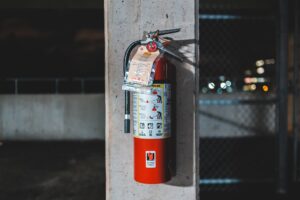
- Ensuring fire extinguishers are in place and appear to be in good condition
- Identifying and reporting fire hazards (blocked exits, faulty electrics, improper storage of flammable materials)
- Helping to maintain the fire safety log book
During an Emergency
- Taking charge of the evacuation for their designated area or floor
- Sweeping their area to ensure everyone has left
- Assisting anyone who needs help evacuating
- Closing doors and windows where safe to do so
- Reporting to the assembly point and confirming their area is clear
- Liaising with the fire and rescue service when they arrive
How Do You Become a Fire Warden?
You become a fire warden by being appointed by the responsible person (usually your employer or building manager) and then completing a fire warden training course. You do not need any prior qualifications or experience.
The steps are:
- Be appointed by your employer as a fire warden for your area or floor
- Complete a fire warden training course — typically a half-day (3-4 hours)
- Receive your CPD-accredited certificate — valid for one year
- Familiarise yourself with your building’s fire safety plan, escape routes, assembly point, and the location of fire safety equipment
- Carry out your duties — regular checks plus leading evacuations when the alarm sounds
What Does the Training Cover?
A typical fire warden course covers:
- Fire science — how fires start and spread (the fire triangle)
- Common fire hazards — electrical, cooking, smoking, arson, and housekeeping
- Fire safety legislation — the Regulatory Reform (Fire Safety) Order 2005
- Fire risk assessments — what they are and your role in supporting them
- Emergency procedures — alarm response, evacuation, roll calls, assembly points
- Fire extinguishers — types, colour coding, and practical hands-on training
- Record keeping — maintaining the fire log book and reporting issues
Do Fire Wardens Get Paid More?
There is no legal requirement to pay fire wardens extra, and in most workplaces the role is an addition to your normal job. However, some employers do offer a small allowance or recognise the role in performance reviews. The role is a valuable addition to your CV and demonstrates leadership and responsibility.
Can You Refuse to Be a Fire Warden?
Technically, yes — the role should be voluntary. However, employers can make it a condition of a specific job role. If you have a genuine reason you cannot fulfil the duties (for example, a disability that would prevent you from sweeping a floor during an evacuation), your employer should make reasonable adjustments or appoint someone else.
How Many Fire Wardens Does a Workplace Need?
The general recommendation is at least one fire warden per floor, with enough to cover all shifts, holidays, and absences. For higher-risk premises (care homes, hotels, factories), you may need more. Your fire risk assessment should specify the number required.
Fire Warden Training in Cumbria
We run regular fire warden courses at our Penrith training centre and deliver on-site training across Cumbria — Carlisle, Kendal, Workington, Keswick, Barrow, and beyond. All delegates receive a CPD-accredited certificate. Our trainers are experienced fire safety professionals from Beacon Fire Protection.
Ready to become a fire warden? Contact us to book or browse our fire safety training courses.
Further Reading
Get Your Team Trained
CPD accredited fire safety and first aid training delivered online or at your premises anywhere in Cumbria.
01768 807 258